
Purpose of a Residential Home Inspection
A residential home inspection is our most common inspection. This inspection includes a full visual examination of the home's major systems, structure, and safety. This can be done for several reasons and can be tailored to fit the needs of the client. A residential home inpsection is often done for a buyer usually before closing, current homeowner looking to sell or simply to gain an understanding of their current home's condition, and during construction where a pre-drywall inspection provides the owner an inspection of the home before the build is complete.
Areas Evaluated During a Residential Home Inspection
Every inspection includes a thorough evaluation of the home's major systems, components, and accessible areas. Our inspections help home buyers, sellers, and homeowners throughout Prince William County better understand the condition of their property.
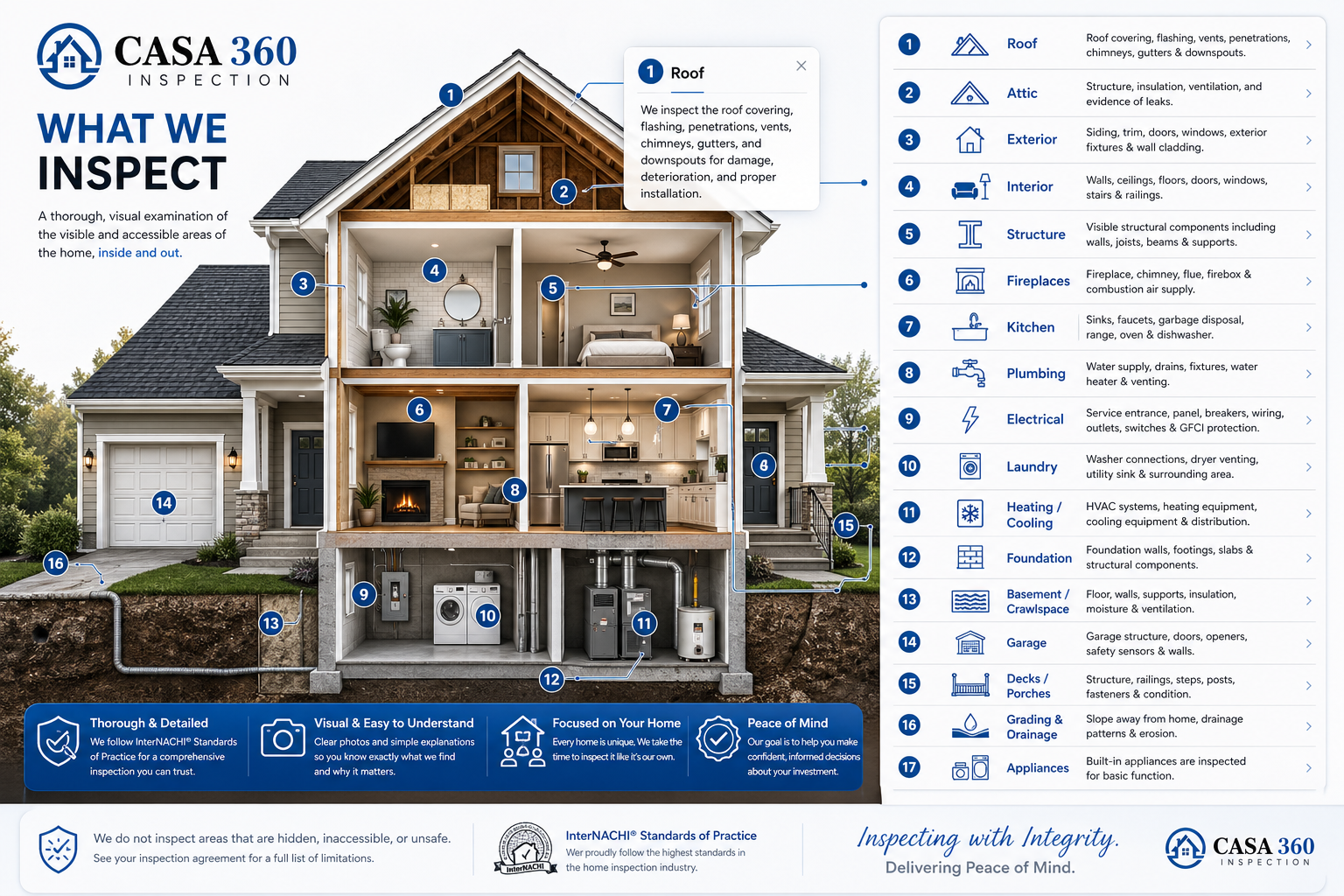
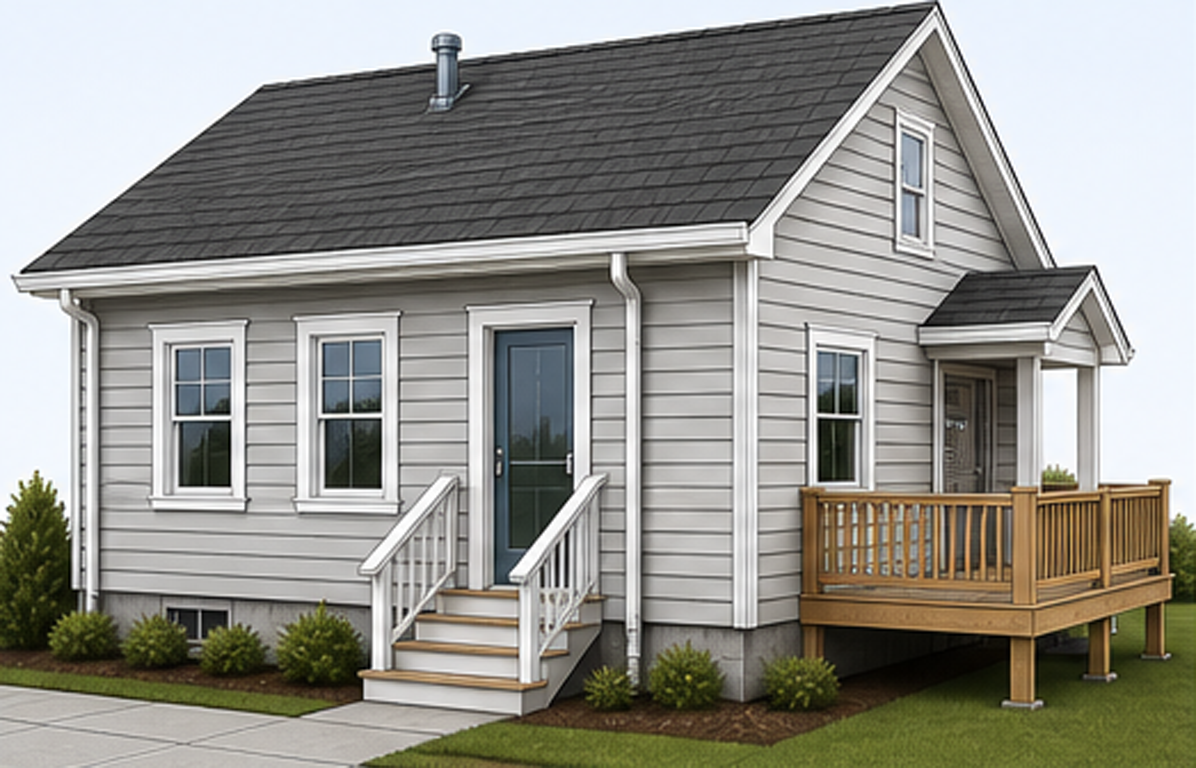
Roof & Exterior
We inspect the visible and accessible components that protect your home.
- Roof Covering
- Flashing
- Roof Penetrations
- Siding & Trim
- Windows & Doors
- Gutters & Downspouts
- Decks & Railings
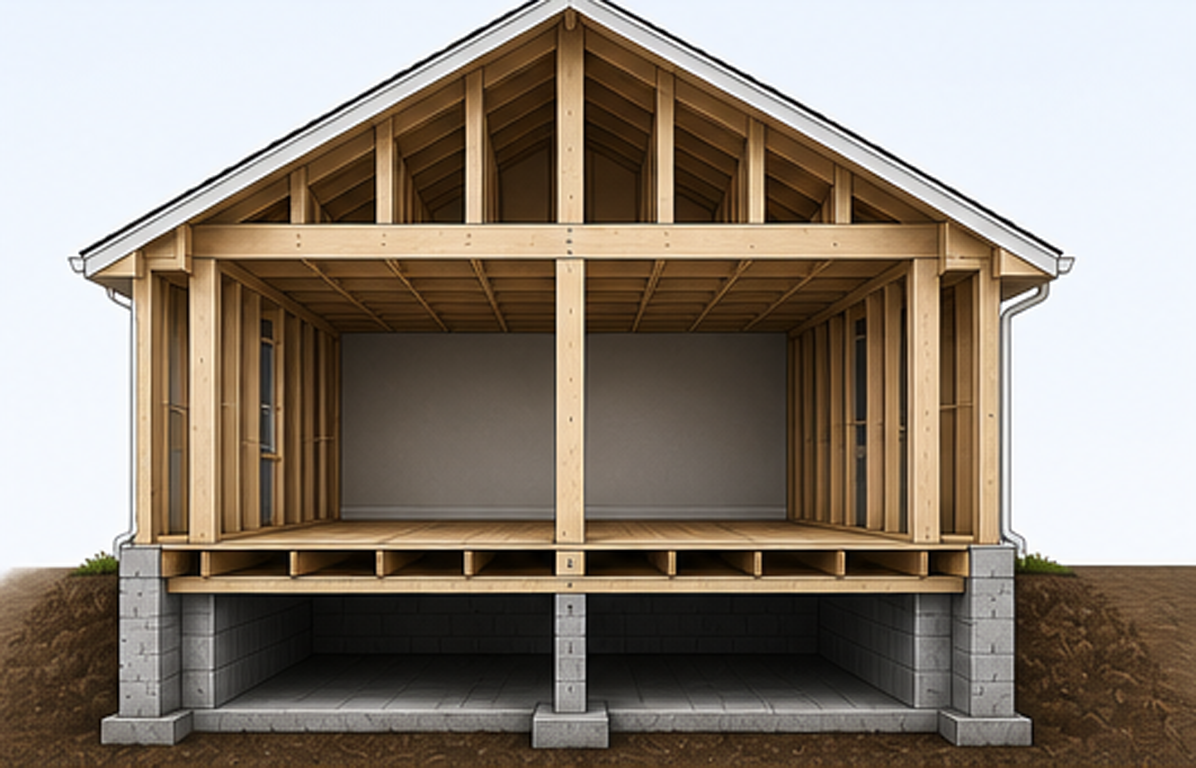
Structural Components
We inspect the visible and accessible structural components that support your home.
- Roof Structure
- Wall Framing
- Floor Structure
- Foundation Walls
- Crawlspace
- Footings
- Support Columns & Beams
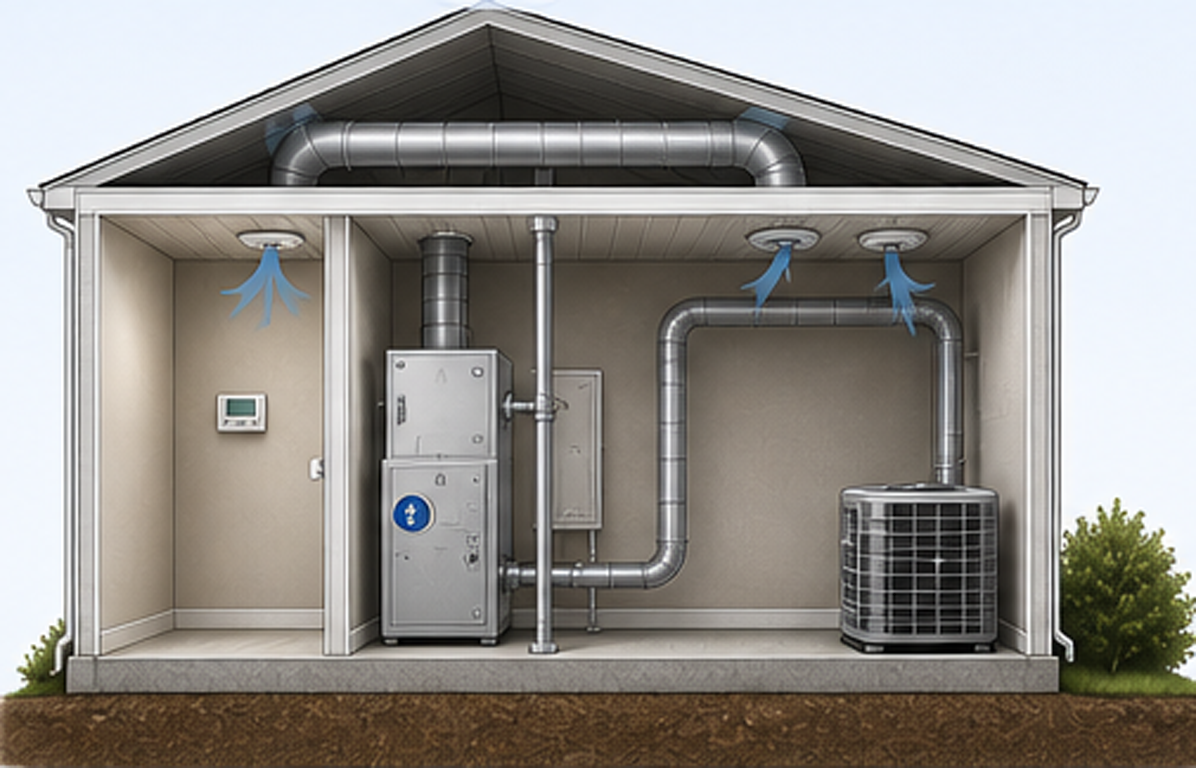
Heating & Cooling
We inspect the components of your HVAC system for proper function and safety.
- Furnace / Air Handler
- Heat Exchanger
- Air Conditioning
- Refrigerant Lines
- Ductwork
- Vents & Registers
- Thermostat
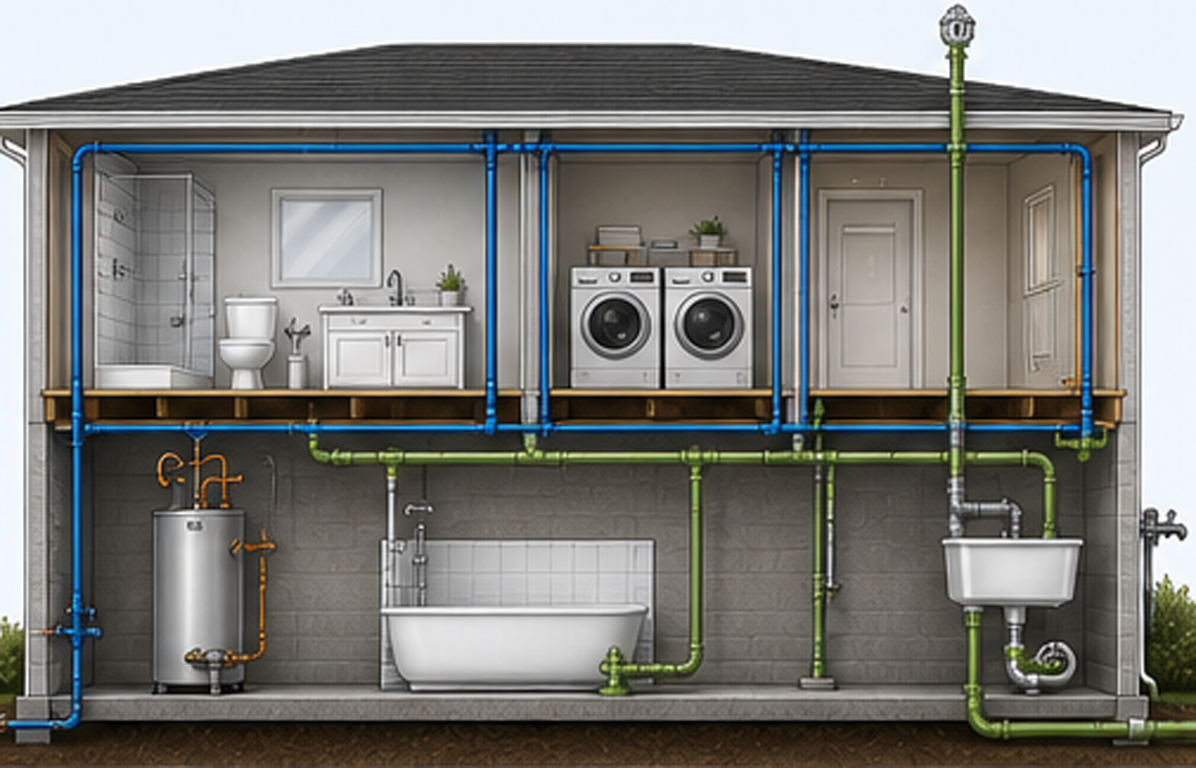
Plumbing Systems
We inspect the visible and accessible components of your home's plumbing system.
- Main Water Shut-Off
- Water Supply Lines
- Fixtures & Faucets
- Water Heater
- Drain Lines
- Vent Pipes
- Traps
- Main Sewer Line
- Shut-Off Valves
- Hose Bibs
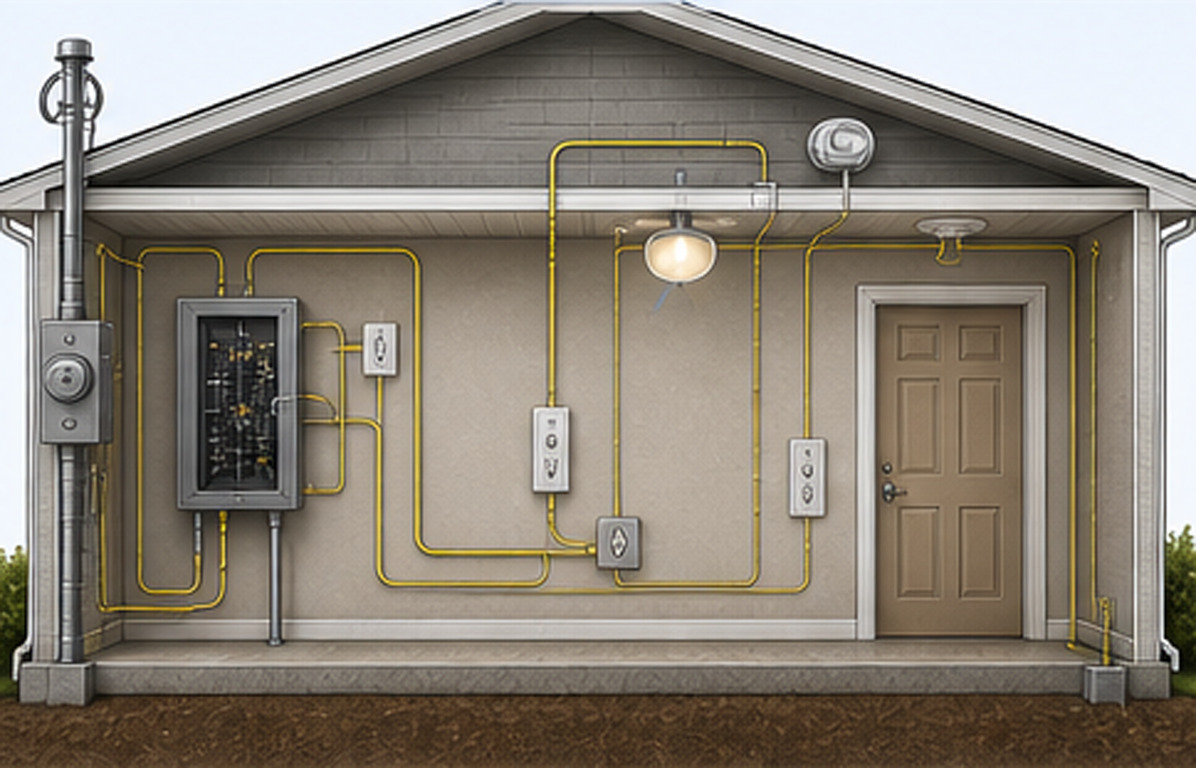
Electrical Systems
We inspect the visible and accessible components of your home's electrical system.
- Service Entrance
- Main Panel
- Branch Circuit Wiring
- Outlets & Switches
- Lighting Fixtures
- GFCI Outlets
- AFCI Outlets
- Smoke Detectors
- Grounding System
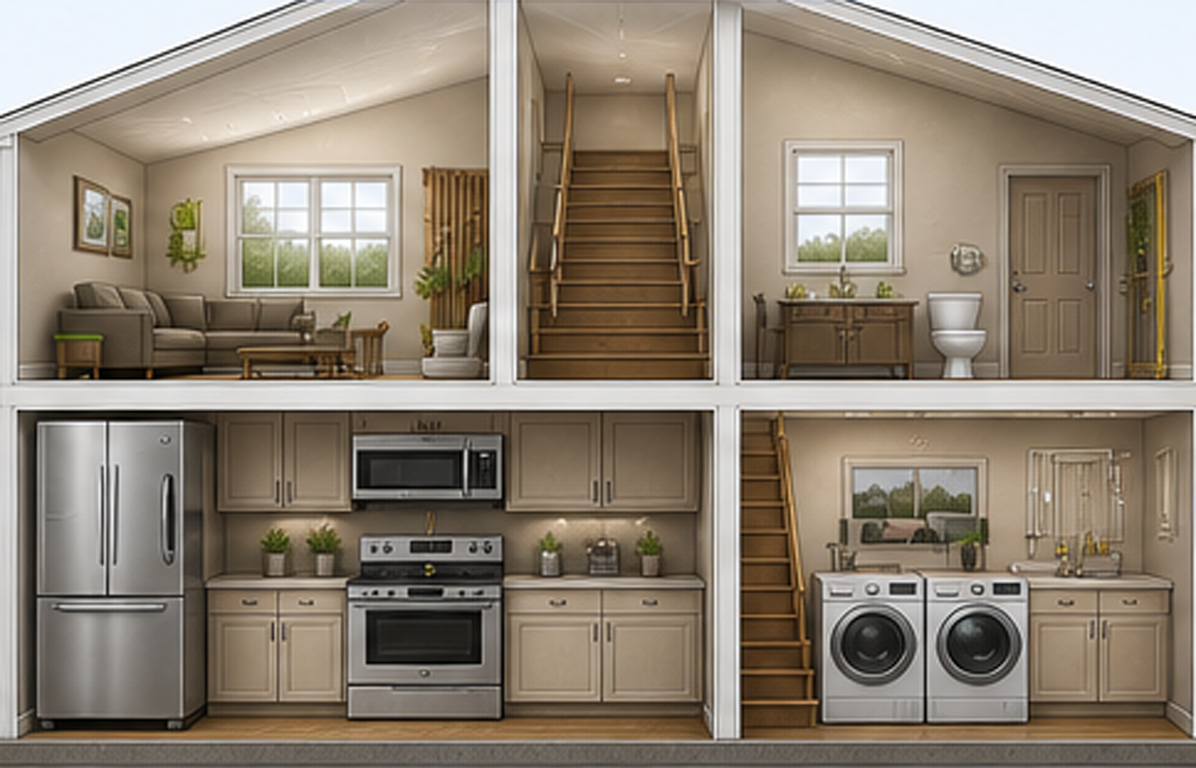
Interior & Appliances
We inspect the visible and accessible components of your home's interior.
- Walls, Ceilings & Floors
- Windows & Doors
- Stairs & Handrails
- Kitchen Appliances
- Bathroom Fixtures
- Laundry Systems
- Cabinets & Counters
Types of Residential Inspections
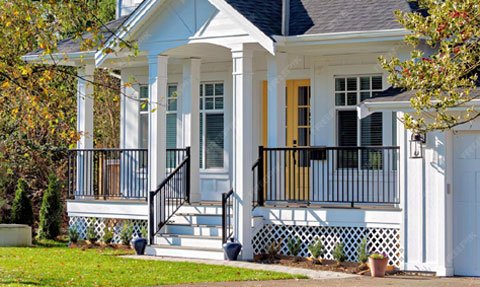
Most Popular Inspection
Buyer's Home Inspection
A full visual examination of the home's major systems, structure, and safety. Done for the buyer usually before closing; it helps identify defects so buyers can negotiate or walk away.
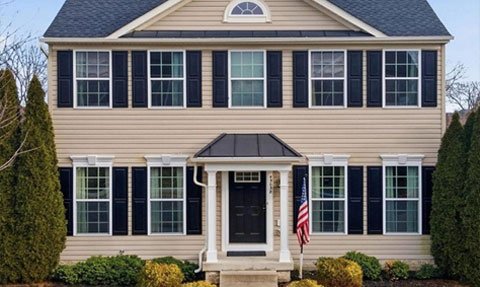
Always Recommended
Seller's Home Inspection
An inspection done for the current homeowner looking to sell or just looking for a current property status. We identify potential issues for your awareness, avoiding surprises that may come up on the buyer's inspection.
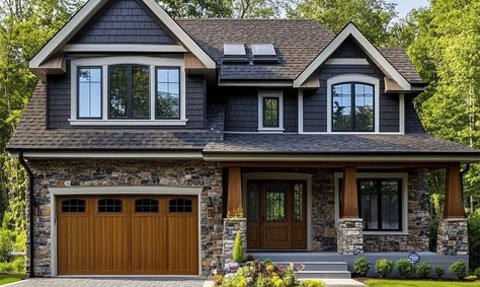
Just the Basics
4-Point Home Inspection
An inspection focused on evaluation of a home’s four primary systems: HVAC, Electrical, Plumbing, & Roofing. It is typically required by insurance companies when issuing or renewing homeowners insurance for older homes.
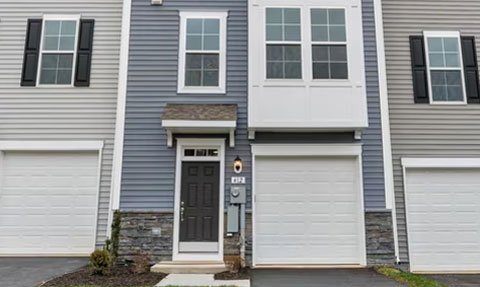
Always a great Investment
11-Month Warranty Inspection
An independent assessment of a new construction home conducted just before the builder’s one-year warranty expires. It identifies defects the builder is responsible for fixing at no cost to the homeowner.
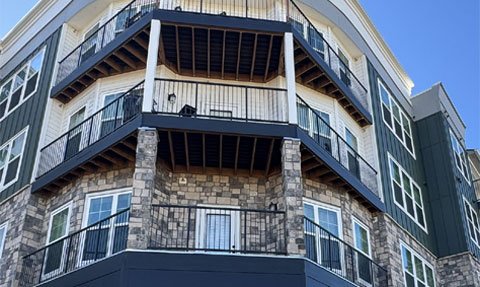
Protects your Investment
Rental Pre-Lease Inspection
A documented walkthrough of a rental property—often called a move-in inspection—conducted by landlords and tenants together before the lease begins or the tenant moves in. It establishes a baseline of the unit's condition to verify safety, identify repairs, and prevent security deposit disputes.
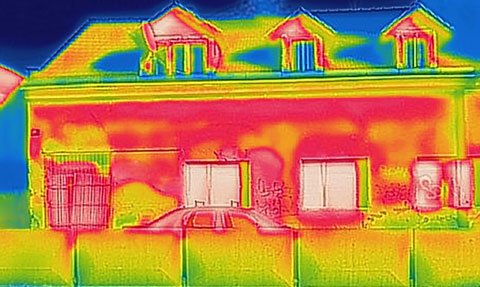
Used on Every Inspection
Thermal Imaging
Used to non-invasively detect hidden, temperature-related issues that are invisible to the naked eye, such as moisture intrusion, electrical hot spots, and insulation gaps. It provides a comprehensive, safer assessment by identifying potential structural, safety, or energy-loss problems before they cause significant damage.
Our Core Process
These are our fundaments for all inspections

Inspect & Document
We thoroughly evaluate the property and provide a clear report with photos and recommendations.

Inform & Educate
We provide straightforward explanations so you know what we find and why it matters; learning about the property's systems and maintenance.

Support
We're here after the inspection too. Ask questions, get clarification, and move forward with confidence.
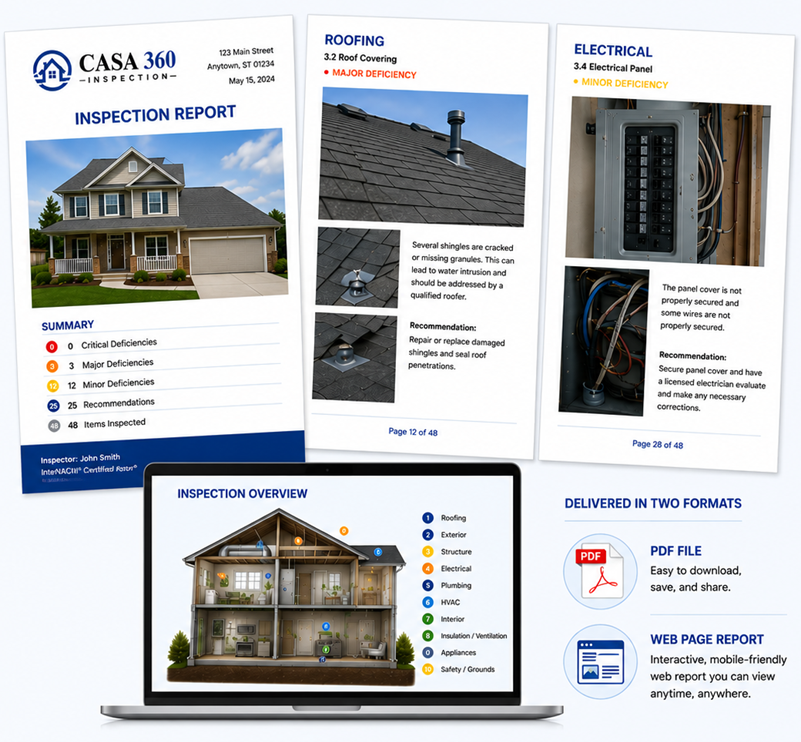
Comprehensive Inspection Reports
We provide clear, detailed, and easy-to-understand reports so you can make confident decisions about your property.
- Detailed & Accurate
- High Quality Photos
- Easy To Understand
- Digital & Mobile Friendly
- Actionable Recommendations
Contact Details
If you have any questions, just fill in the contact form, and we will answer you shortly. If you are living nearby, come visit our office.